

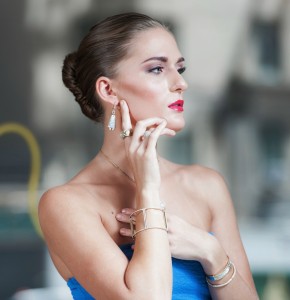
Choosing jewelry for a party can become surprisingly complicated. An outfit that looked complete five minutes ago suddenly feels unfinished, and before long you are deciding between three necklaces, several pairs of earrings, and rings you forgot you owned.
The answer is rarely to wear more. Jewelry tends to work best when it gives an outfit direction without competing with everything else. The occasion, neckline, fabric, hairstyle, and even how comfortable a piece feels after a few hours can all influence the final choice.
Dress for the Occasion First
Before opening the jewelry box, think about where you are going.
A formal dinner calls for a different approach than a relaxed birthday gathering. An evening celebration may leave more room for sparkle and statement pieces, while a daytime event often works naturally with lighter, simpler jewelry.
The outfit matters, but so does the setting. Consider the dress code, venue, time of day, and how much movement the event involves.
You do not need an entirely different jewelry collection for every kind of party. Instead, adjust how much attention your accessories command. A simple outfit can carry a stronger piece, while elaborate clothing may need very little additional decoration.
Shop for Variety With Future Outfits in Mind
It is easy to buy jewelry for one particular event and then realize later that the piece works with almost nothing else you own.
A more practical collection contains pieces with different levels of impact. A few understated options can handle quieter outfits, while statement earrings, rings, or necklaces can transform simpler clothing.
When exploring different styles and price points, Wholesale Jewelry Website offers a broad selection that can make it easier to compare pieces for different outfits and occasions. Focus on jewelry that works with the necklines, metals, and overall style you already wear rather than buying for only one event.
Versatility does not have to mean plain. A distinctive piece can still earn regular use if its proportions, colors, and style work with several outfits.
The aim is to create options, not a collection full of pieces waiting for one extremely specific occasion.
Let the Outfit Set the Direction
Look at the clothing before choosing the jewelry.
A dress covered in sequins, embroidery, beading, or dramatic details already has a focal point. Adding equally elaborate jewelry can make the finished look feel crowded.
Cleaner clothing gives you more room to experiment.
Necklines are particularly useful when deciding whether a necklace belongs. An open neckline creates space for a pendant or shorter necklace, while a high or heavily detailed neckline may look cleaner without one.
Some jewelry designs are versatile precisely because they can work with several kinds of clothing. The enduring appeal of a tennis necklace is a good example of how one relatively refined piece can move between casual clothing and dressier outfits.
The accessory should look connected to the clothing rather than added at the last second.
Give One Piece the Leading Role
Statement jewelry works because it attracts attention. The problem begins when several pieces are competing for that attention at once.
If the earrings are large and dramatic, the necklace can be delicate or left out altogether. A substantial necklace may look better beside understated earrings. An oversized cocktail ring can provide enough detail without requiring several bracelets on the same hand.
This does not mean you can never wear multiple bold pieces. It simply means they need a visual relationship.
A useful approach is to get dressed completely, add the jewelry you are considering, and then remove whichever piece feels least necessary.
That final edit often makes the whole outfit look more deliberate.
Use Color and Metal to Create Balance
Jewelry introduces another layer of color to an outfit, even when there are no gemstones involved.
Gold, silver, rose-toned metals, pearls, and colored stones can each change the mood of clothing. Instead of treating metal choice as a strict rule, look at the outfit as a complete palette.
Warm clothing colors can pair beautifully with warmer metals, while cooler shades often sit naturally beside silver-toned pieces. Mixing metals can work too when it looks intentional rather than accidental.
The same idea applies to colored stones. A neutral outfit gives brighter jewelry plenty of room, whereas patterned or colorful clothing may benefit from accessories that repeat one shade already present.
Thinking about color harmony when styling an outfit can make it easier to create contrast without allowing every element to compete.
You are building one look, not assembling several individually attractive items.
Remember That Comfort Changes How Jewelry Looks
An accessory can be beautiful and still be wrong for a long evening.
Heavy earrings may begin pulling after an hour. A bracelet that constantly slides down your hand becomes irritating quickly. Long necklaces can catch on clothing, while rings that fit poorly may become uncomfortable as the night goes on.
Try everything on before the event rather than assuming it will be comfortable because it looks good.
Move around. Sit down. Turn your head. Put on the jacket or coat you plan to wear. Check whether earrings catch in your hair or whether a bracelet snags on delicate fabric.
Jewelry should become something you almost forget you are wearing. If you spend the entire evening adjusting it, the accessory is controlling the outfit rather than completing it.
Layer With a Reason
Layering necklaces, rings, and bracelets can create depth, but more pieces do not automatically create better styling.
With necklaces, different lengths usually help each piece remain visible. Similar proportions or a repeated metal can give several chains a sense of connection.
The same applies to rings and bracelets. Leaving a little visual space can prevent stacked pieces from becoming one large block of detail.
There is also nothing wrong with choosing a single piece.
Sometimes one necklace sitting at exactly the right point on a neckline looks more polished than three layered chains. Styling should respond to the outfit rather than to a rule that says layering is always necessary.
Consider Hair and Makeup Before Making the Final Choice
Hair can completely change the effect of earrings.
With hair pulled back, even relatively simple earrings become much more noticeable. With long hair worn down, smaller pieces may disappear while longer or brighter earrings remain visible.
Makeup changes the balance around the face too. Dramatic eyes or a bold lip already create a strong focal point, so simpler jewelry may keep the overall look from becoming too busy. More understated makeup can leave room for a stronger accessory.
Before leaving, take a quick photo under ordinary indoor lighting.
Jewelry can behave differently in photographs than it does in a mirror. Highly reflective pieces may appear much brighter, while delicate designs can almost disappear.
A photograph gives you one last chance to see the outfit as a whole.
Build a Collection You Can Actually Use
A useful party jewelry collection does not need to be enormous.
A few dependable pieces can cover a surprising number of occasions. Simple earrings, one stronger pair, a versatile necklace, a statement piece, a bracelet, and several rings can provide plenty of combinations.
The exact collection should reflect what you wear most often.
If you rarely wear necklaces, there is little reason to accumulate ten of them because a styling guide says you should. If earrings are what make you feel dressed up, give yourself more variety there.
Over time, you will notice which pieces repeatedly make it out of the jewelry box. Those are usually the best clues to your actual style.
Let the Jewelry Finish the Look
Party jewelry does not have to be complicated.
Start with the event and the outfit, then decide where you want the eye to go. Use color and proportion to create balance, keep comfort in mind, and resist adding another accessory simply because there is room for one.
The strongest look is rarely the one wearing the most jewelry. It is the one where every piece seems to belong.
When the accessories complement the clothes and still feel like something you would naturally wear, the result looks polished without appearing overly planned.